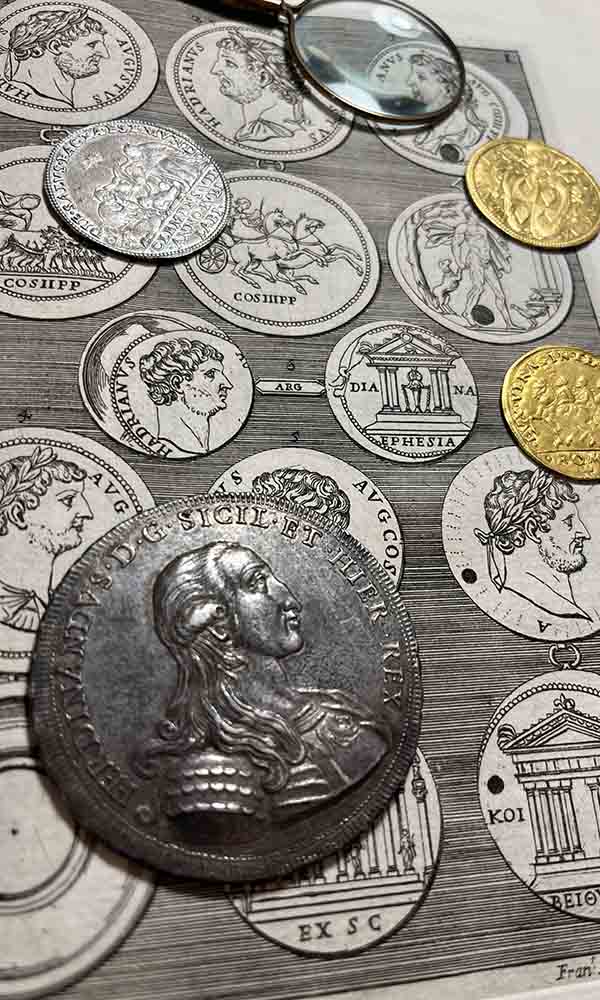


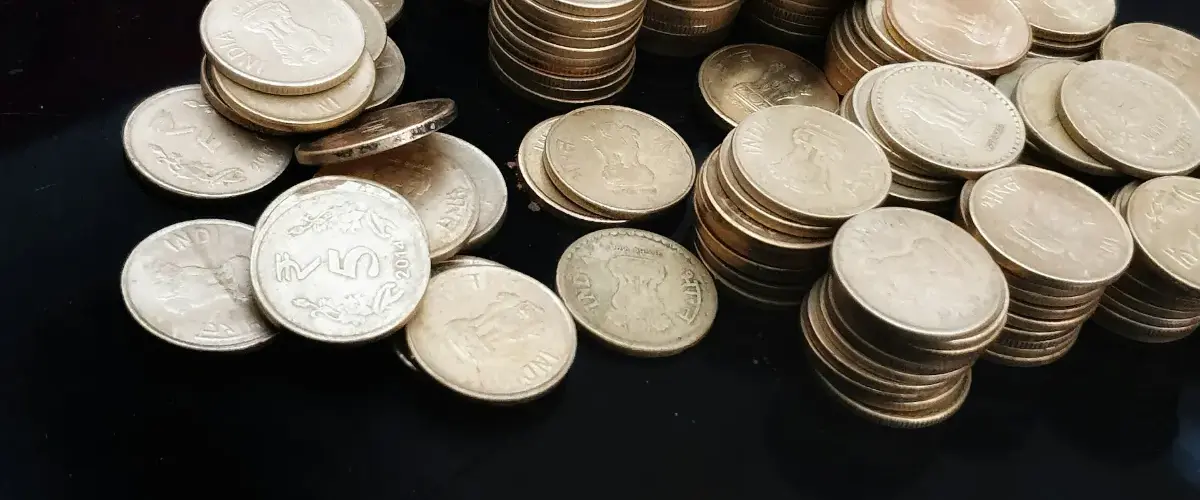
The new blog article numismatic specialist Numismatica Ranieri is dedicated to find out what are the factors that determine the value of rare coins in the panorama of numismatists. In this article we are going to focus on the concept of rarity of a coinon the terms of assessment of the rarity of a coin, on the state of conservation of a coin besides the motives that lead many fans of coin collecting coins as a form of investment for the future.
The value of rare coins
Because collecting rare coins in the world coin
The coin is a form of art even if by some is considered, as such, “minor” compared to the more well-known and classical painting and sculpture. Unlike these or other forms of collecting, ceramics, prints and
the weapons, for example, the coin, however, puts on the pan of the balance, not the few advantages between whom we wish to emphasize the following 2:
- the economic factor: you can take numismatic collections, with a few resources, something virtually impossible in other sectors.
- the space factor: a collection of coins, even if composed of a considerable number of specimens, and occupies a volume is more or less negligible.
Last, but not least, we note that the other sectors of the collectables are now difficult both the availability of the pieces for the omnipresence of counterfeit, fake, or at least damaged.
These are things that, unfortunately, hit all the branches of the antique, but the coin in the form certainly less.
Philately, which shares many aspects of numismatics, it is definitely “easier” to manage also with respect to the side purely economic. This is true at least at the beginning because soon becomes more difficult and expensive.
Finally, as far as the cultural aspect of the comparison with the numismatics is impossible given that the stamp has approximately years of 200 to life.
The concept of the rarity of the coins in numismatics
The concept of the rarity of the coins, as often happens in regard to the search of goods in the field of economic derives from the encounter between supply and demand. Trivially, in fact, a coin, you can define rare when it is not readily available on the market and sometimes can't be found.
Of course it is not so easy to explain the concept of rarity of a coin, given that this lends itself to more than one interpretation.
A coin is rare because there are few exemplary, or because there are few of them on the market?
You could argue that, in the end, the important thing is that a coin, if rare, it is enough; but a distinction is required to clarify the reason why some rarity to realize higher amounts of the other.
Suppose we have a the currency defined Rarissimwhy coined in just 10 piecesbut there are a maximum of 7 collectors; the 3 pieces "accasati" would be proposed for a long time still on the market, even for years, and without that they can enjoy some revaluation (or risking even to decline in value).
On the contrary, a coin Very rarecoined in 100 specimens, but can boast of a crowd of 200 potential buyers, it would always be easy to sell and enjoy, over time, also a good revaluation because half of the requests would always be unanswered.
Is the law of supply and demand that rule the market and determines the values. We can conclude that la rarity of a sample is important for the purposes of establishing the value, but it is not decisive.
Degree of rarity of a coin
Below you will find the list in ascending order of the degree of rarity of a coin ancient treated within the world numismatic. Visiting one of the many that exist within the shop onlineyou can find the same initials as the description of the object in a separate table.
- Very common (CC). Available with ease on the market.
- The Common (C). Available with ease on the market.
- Uncommon (NC). Sample that you find with a little ease.
- Rare (R). Copy that appears with difficulty.
- Very rare (RR or R2). Difficult to find on the market in a very short space of time.
- Very rare (RRR or R3). Appears with great difficulty on the market.
- Extremely rare (RRRR or R4). Of the greatest rarity, has appeared a few times on the market in 50 years.
- Of the greatest rarity (RRRRR or R5). Are the coins and notes in a few specimens (maximum 4 0 5), practically impossible to find.
- Unique. The end never abbreviated, indicates a specimen of which are not known to other similar.
The conservation status of a rare coin
Another important factor in considering the value of rare coins is of course, the state of preservation of the coins. Until some decades ago, the state of conservation of a coin was considered as a secondary element. First of all was the currency as documentas a witness of a particular age or a particular event. That's why in the auction sales of the past few small coins in metal poor (copper or a mixture), they could make of the digits equal to or even greater than those of specimens, gold, more “noble”.
Our culture has changed and the way of collecting is a clear example; first of all the aesthetics.
In this sad ranking follows the appearance venal and only a poor third place we find the cultural interest that these coins can awaken in us. And it is for this reason that the conservation status of a currency is of great importance; on it is based is to determine the commercial value of both the marketability of the same coin, since the majority of collectors, in particular that of the sectors of the modern and contemporary, and prefers the specimens in good condition.
For this reason, it is not rare to find a strong disparity in the price – sometimes seemingly exaggerated – between a state of conservation and the one just above.
It is impossible to teach you to distinguish between different degrees of conservation because the way of assessing the wear varies according to the period in which a coin was minted, and the system used. Only with experience, you will be able to acquire this ability.
Degree of conservation of a coin rare
Below you will find the list in descending order of the degree of conservation of a coin ancient treated within the world numismatic:
- Uncirculated (FDC or Fdc). Maximum state of preservation, very rare in the coinage of the classical and medieval times, is the "top" for many coin collectors contemporary.
- Splendid (SPL or Spl). Excellent preservation, characterized by mild signs of wear and tear that only have "tarnished" the reliefs, but the coin has any serious defect. And hardly found in the coins of classical and medieval.
- The beautiful (BB). Perfect storage for coins of Greek, roman and medieval, the specimens are lovely little appreciated by the collectors of contemporary, at least that it is not rare pieces. If signs of wear are very obvious and sometimes are blows or scratches, but the copy is still pleasant and the legend totally (or almost) readable. Recommended for beginners and for those who do not have large financial possibilities.
- Very Nice (MB). Many copies you have in this conservation and are easily accepted by those who collect coins, classical and medieval; little benefit if they belong to the modern period or contemporary. The remarkable signs of wear and tear (common shocks and scratches) erased a good part of the reliefs and the same legend may be affected to a significant extent, especially in the case of ancient coins. Beautiful (B). Contrary to what the word would suggest, the specimens in the beautiful conservation are very worn and deserve the attention of collectors only if they are of great rarity, or as pieces from studio to "make your bones" and improve your knowledge of the industry.
- Discrete (D). It's hard to find similar examples in sales to the auction, or in the lists at a fixed price, because few are the people willing to buy them. The legend is, like all the rest, almost entirely unrecognizable.
- Mediocre (M). We are at the minimum level of conservation and, consequently, the copy is so worn as to be virtually unrecognizable, and, however, hardly classifiable.
- Funds in the mirror (F. S. or Fs). It does not indicate the state of conservation of a coin, but rather a feature: that is, to have the fields so shiny from potercisi myself in the mirror. This feature is almost always the desired polishing, specially the die axis or coin rotation, but it is also possible that the earliest examples of a beating they have the funds particularly bright, almost "to the bottom of the mirror."
Conclusions
Hoping that this article on how to determine the value of rare coins in coin collecting has been of interest to you, waiting for your opinions.
You can let us know what you think or send us other tips through the space, and comments confidential, or through the contact page. Also for any doubts or queries related to the sector of the coins investment we invite you to visit the section of our website.
For any information or further details of our e-mail address is the following: info@numismaticaranieri.it
To the next one with the best news of the sector of numismatic.