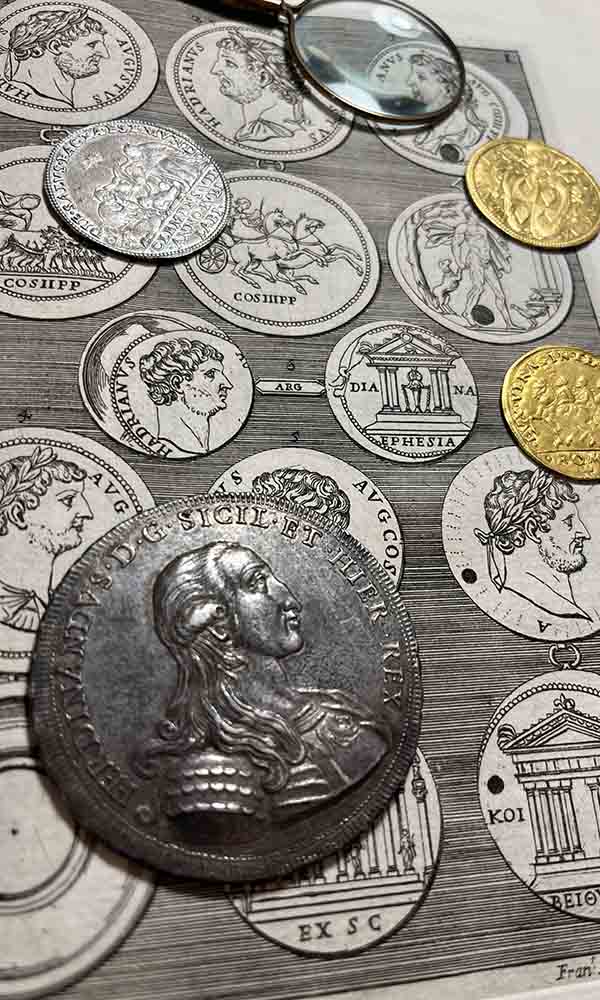


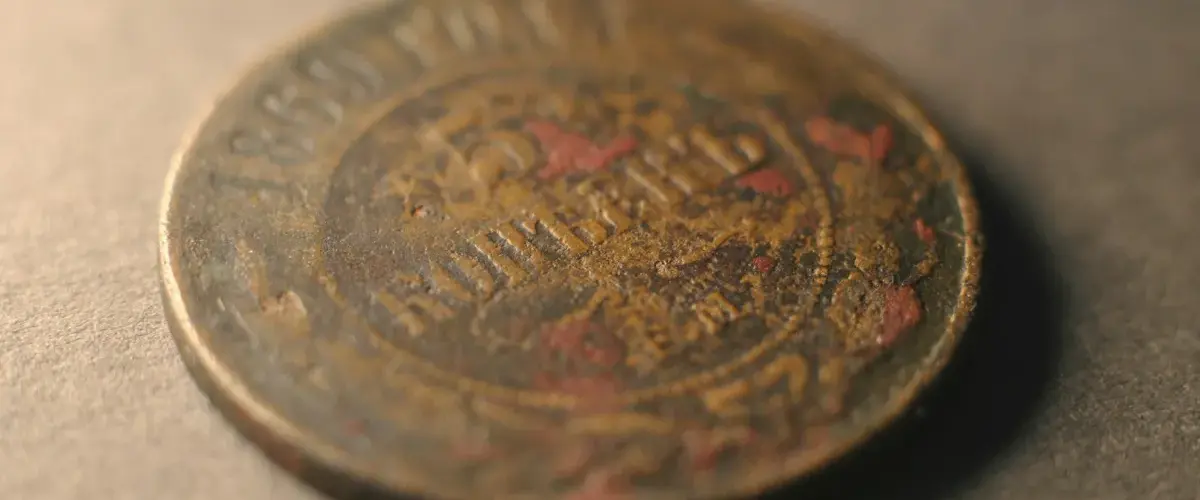
Dear readers Numismatica Ranieri, today's article is dedicated to the birth of the coin and the evolution of the techniques of the evolution of money in the course of the centuries. After having spoken of the value of rare coins in coin collecting, we continue our analysis of this theme, illustrating in details when it comes to money and how this captures the value in the course of history.
When was the coin
To establish when was the currency you need to first understand what is meant by money. The need to exchange, barter, in the practice of the trade, it is innate in man, that has never stopped practicing. Before the birth of the coinbut for a certain period of time, even at the same time his movement, the exchanges were carried out with the goods or with the animals the peoples had in abundance. So in abundance to rise to a term of comparison to determine the value of any other thing. A sort of pre-coinage, which is also called "the moneta natural".
Without going too far back in the centuries, and "trouble," the old, willing to pay 4 oxen, a slave who knows how to work, suffice it to say that in that time much closer to our this custom was still very much alive: the dry fish in Iceland, the rice in Korea, and the skins of the beaver in Alaska are just a few of the possible examples.
Many of the terms used at the time are now commonplace words to define the same thing: the money, from it happens namely, the richness of the heads of cattle descended capital – pecunia is derived from pecus, flock, as well as rupee (Roupa in India) soon the people understood the advantages of metals; unalterable, of small size, and thus easily transportable and, if necessary, concealable, easily recognizable, look, sound and weight, and reduced into fragments without loss of overall value because each piece is kept value proportional to its weight.
The first forms of payment with metal objects it goes back to the III Millennium.C. but as an aspect, have nothing to do with the currency in the traditional sense, being in the guise of the ring – popular in Egypt – or the loaves of copper (II millennio a.C.) or even axes, simple bar linguiformi and even shells.
All payment systems prior to the currency in which they share the commercial nature, but from which they differ by the lack of a trade mark, a seal, a value; in short, the lack of official data from the issuer.
These differences, even more than those of form, the date of birth of the coin-wayit is fastened to the VII century.C. in Lydia – the southern region of present-day Turkey – the work of the king Croesus or his father Aliatte.
This important tool for the exchange has revolutionized the lives of entire peoples, who, by the sheep-farming and agriculture, they devoted themselves more and more to the trade.
How did the currency
The evolution of the techniques to the minting of the coin
There are different techniques to the minting of coins that have taken place over the centuries:
- initially for the middle of the merger with "print" single or even multiple) (recognizable by the presence of specific growths or lack of metal on the edge)
- then through the use of die axis or coin rotation (arrays engraved)
The coinage of the "anvil" was set on a basement, while the "hammer"ready to receive the blow of the mace, was leaning on the planchet. Given the hardness of the materials used, the logs were previously "softened"taking it in high temperatures, sometimes approaching that of melting.
Already in medieval times, the car was replaced by the man in the execution of typing. The press system in the fall consisted in that a heavy weight is dropped from a certain height, impressed with the strength of a round.
In the ‘500, was born the press screw, also known as press the rocker. He owned a large metal bar with weights at both ends, which he commanded a screw on which was fastened to one of the die axis or coin rotation. Due to the size of the machinery, the work was stressful for the whole team – composed of 8 men and 20 minutes needed to be replaced. Conversely, the speed of execution guaranteed for thirty pieces per minute.
Later it was used in the coinage of the roller, conceptually similar to the machines to roll out the pasta. It consisted of two rollers engraved with multiple arrays, because, unlike other systems, it's not introduced tondelli individual but sheets of metal that were then cut out using special punches.
In the EIGHTEENTH century, and more precisely in 1770, a british built the machine to make steam. You even thought to decorate the cut of the coins to identify the specimens fleeced" (nailed down), from the lowest value compared to the intact (at the time a coin was worth as much as noble metal contained). The systems tested gave yes the outcome hoped for, but at the expense of execution speed greatly slowed down.
Thus was born the machine orlatrice, which consists of two metal bars — a fixed and a sliding — engraved and placed at a distance slightly less than the diameter of the log. The slider is rotated on its own the currency, thanks to the considerable pressure, he received the impression.
Periods minting coin
In particular, we can identify two main periods of minting of the coin, namely:
- The period of the minting hammer (lasted more than two millennia)
- The period of the minting machine (started in the SIXTEENTH century, and is characterized by mechanization inside of the workshops monetary)

Within these two broad distinct periods, one can identify the following five below historical periods, each of which has unique properties in relation to the minting of the coin:
- Ancient (600 to.C. – 476)
- The middle ages (476 -1 492)
- Pre-industrial (1492 – 1780)
- Industrial era (1780s – 1945)
- Contemporary period (1945 – present)
Engraving of the coin
In more recent times also engravers have found support in technology that, with the pantograph, he avoided them to work directly on the die axis or coin rotation.
Currently, he proceeds to make a design draft and, subsequently, creates an embossed pattern in wax or clay, which will then turned into plaster, larger in size than the original.
The pantograph, following faithfully the forms of the plaster modelthe plays in desired size on a piece of steel called the punch, also in relief. With the punch, possibly retouched by hand to eliminate imperfections, you get the coinage of the real striking it several times a block of steel, soft to the middle of the barbell. With each stroke, the coinage hardens and is then annealed to make it again soft.
Conclusions
Hoping that this article dedicated to discover when it comes to the money, and the evolution of construction techniques of the coin has been of interest to you, waiting for your opinions.
You can let us know what you think or send us other tips through the space, and comments confidential, or through the contact page. Also for any doubts or queries please visit the contact us section of our website.
For any information or further details of our e-mail address is the following: info@numismaticaranieri.it
To the next one with the best news related to the world of numismatics.