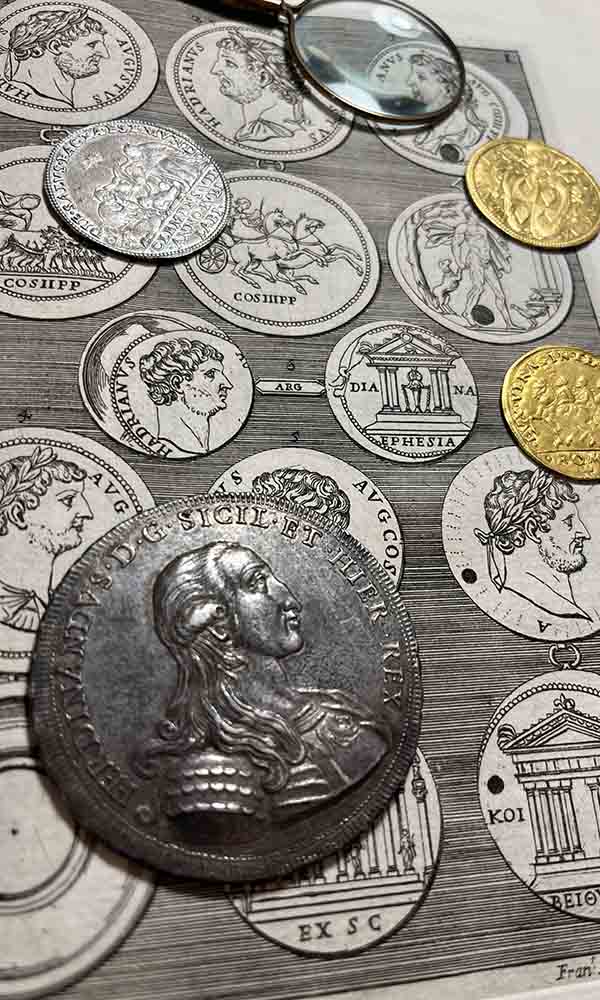


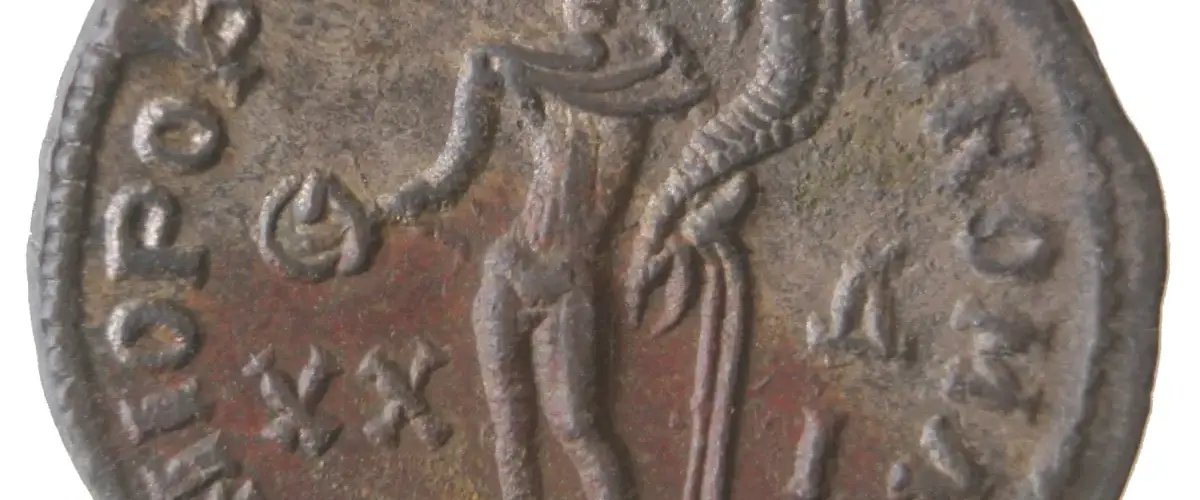
Dear readers Numismatica Ranieri in this post we are going to find out what are the coins ossidionali and their main characteristics. If you never heard of coins ossidionali in the coin, we can tell you that they are linked to the history of civilization, and were mainly used at the time of the romans during the campaigns for expansion and conquest.
For any information or details relating to these coins, we recommend you visit our online store and contact us via the contact page. Good read.
The coins ossidionali
At the time of the great houses war for domination of the territory or for their expansionist ambitions, many Italian cities were narrow siege by the armies of the opponents.
Months and months of tireless presence of these soldiers that prevented any step in and out of the besieged city. The reason was quite simple: to force the capitulation without having to resort to direct confrontation, by the ruinous cost in human lives and the uncertain outcome.
Taken by the famine, and with the plague that was claiming victims in the besieged almost always result: it was only a matter of time.
During these long periods, due to the lack of the supply of money, the authorities were forced to having to cater to the needs of the soldiers, and sometimes mercenary, who claimed the pay.
For this reason, they saw the light of the coins "ossidionali", authentic examples of the coinage of need.
The fact he used the materials easily perishable goods such as leather and either the lead or the coining a small number of pieces that were delivered to the captains of mercenaries as a form of "promissory notes", he makes it clear why these fascinating coins are always very rare.
The history of Coins ossidionali
This type of coin was in use at the time of the Romans to reward commanders that freed up troops besieged a crown corona obsidionalis or graminea. As I said earlier, it was generally of the coins minted to pay the money to the troops.
The most outstanding feature of these coins is the irregularity of the form but also of the value, it is often not in line with the standard money that is typically used in the area, or corresponding to the content in the metal. They were minted by both the besieged and, more rarely, by the besiegers.
Often due to the lack of metal coinage, have also been made minting with a non-metallic material such as leather or paper.
For their intrinsic value (just the metal), which is typically lower than the nominal value, were promptly withdrawn after the events of the war.
The first evidence of coins ossidionali you have only since the SIXTEENTH century. The coins ossidionali are very numerous between the XVI and the XlX century. The most ancient coins ossidionali you know, they were beaten in Italy on the principle of the SIXTEENTH century, on the occasion of the sieges of Pavia and Cremona under Francis I. Source Wikipedia
Conclusions
Hoping to have offered some interesting indication in relation to the coins ossidionali, we are waiting for your valuable comments. We also invite you to write us for any information or further details. The official email address is: info@numismaticaranieri.it