

Dear readers Numismatica Ranieri, in this article of our blog numismatic we will explore how the discovery of treasures has been addressed over time by different cultures, starting from the time of the romans to the end up to the present day. Good read.
Those who find a treasure will lose a friend
Different assignment rules in time
Not always the discovery of a treasure is a fortune and a source of wealth; often, indeed, becomes a source of trouble to no end. Already at the end of the second century after Christ, a famous jurist romano, Giulio Paolo, called the treasury at about the same words today from the various civil codes of the West: "each quantity abandoned pecunia (money) that dominum non habeat (without a master)". Two centuries later, with a law of the time of Theodosius the 380, the "money" were added, expanding the concept of treasure, the "monilia seasoned to ignotis dominis tempore vetustiore", that is, objects buried in the unknown and meeting again after a long time. With Justinian, the two terms of "money" and "monilia" blend together in a unique concept of treasure: the "furniture" that includes every good mobile. Always in the concept of the treasure, with Justinian, include the archaeological heritage: the urn full of coins found in the underworld is not more money, bullion, but the object of the artistic and historical value. The concept implemented by our code that considers the treasury "any floating object, valuable, that it is hidden or buried, and whom no one can try to be the master".
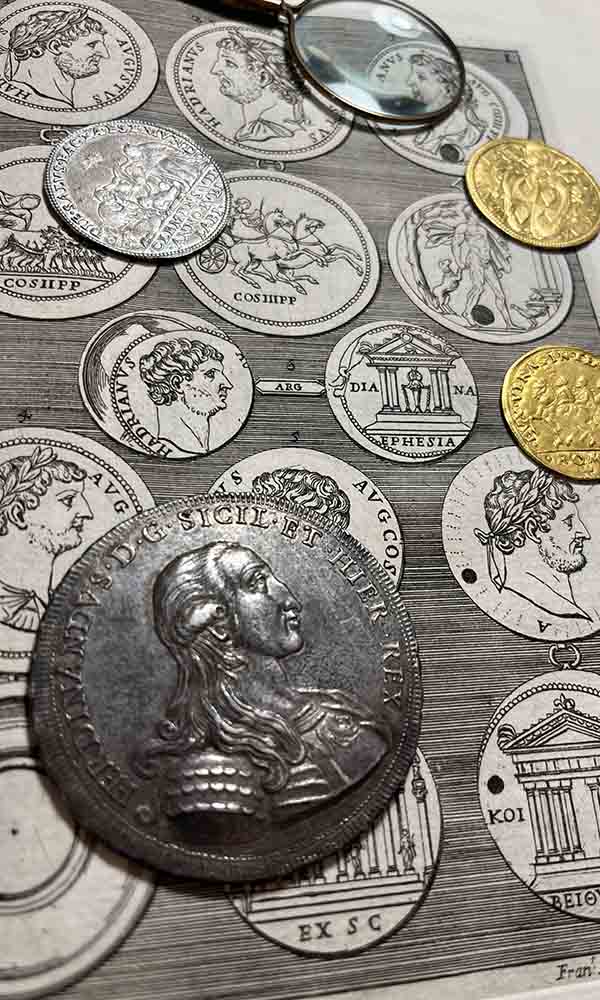
Hadrian assigned all the treasure to the owner of the house or property where it was hidden, if he or she discovered it. If the discovery was made by someone else, half went to the owner and half to the finder. If the land was state-owned, the treasure went to the state and the dealer. Justinian took another step forward: if the treasure consisted of artistic or archaeological objects, the state became the owner, but it was obligated to pay a reward to either finder.
Legal concepts passed equal by the law, ancient and modern. Today – after a run secular State – those who find objects of artistic value, or archaeological and numismatic must deliver them to the State, whether or not the owner of the land where the treasure was hidden. However, can claim a credit to the State. The State of practice buy the treasure but has to compensate for both the author of the discovery that the owner of the land. Always that the two people are not the same. But how much is the compensation? Here is the busillis. According to our Code of conduct (art. 44) it amounts to a maximum of one-quarter of the value of the things found. And if the data subject refuses the digit, will determine the "prize" at the discretion of a special commission formed by three people, only one of which is appointed by the owner. In addition, all charges must be prepaid by the latter.
English law on the subject of the finds of treasures
Blessed are the british instead: according to the law on the treasure unearthed or otherwise discovered belongs yes to the Crown (i.e. the State) and those not in the delivery goes straight to jail, but to the discoverer must be a compensation in cash equal to the value of the treasure itself. And all of the other music...
Still made in the law, found the deception. Cutouts and quibbles often make it difficult if not impossible the application of the law. What is a hidden treasure or buried? For example, a treasure discovered in the attic or in a tray can be equated to a treasure buried? Still: fundamental requirement is the absence or the unavailability of the owner? The distinction clear: in the second case, in fact, you should talk about Things that are lost and not hidden... And we could continue to infinity.
The prophecy of the explorer of the seas
Writes Jacques Yves Cousteau, the famous explorer of the depths of the sea, in His book "The silent world":
"...It may not happen to the commander of a ship most tile on the head of the one to run into a treasure. First of all, you must assign each member of the crew is the part that is their right; and then if, for example, of the Spanish golden age, the heirs of the conquistadors come forward claiming their rights on the basis of complicated genealogies. The government of the Countries in whose territorial waters it was found the treasure you affretterà to decurtarne a good slice through taxes. When the poor man to return home, there will your government to take away his half of the coins in your pocket and always admitted that he remained. The risk of also losing friends, his reputation, and also the command of the ship, so as to end up cursing the moment he decided to put his hand on the treasure."
Be warned, half-saved.
Conclusions
Hoping that this article was of interest to you, waiting for your opinions.
You can let us know what you think or send us other tips through the space, and comments confidential, or through the contact page. Also for any doubts or queries please visit the contact us section of our website.
For any information or further details of our e-mail address is the following: info@numismaticaranieri.it
To the next one with the best news related to the world of numismatics.